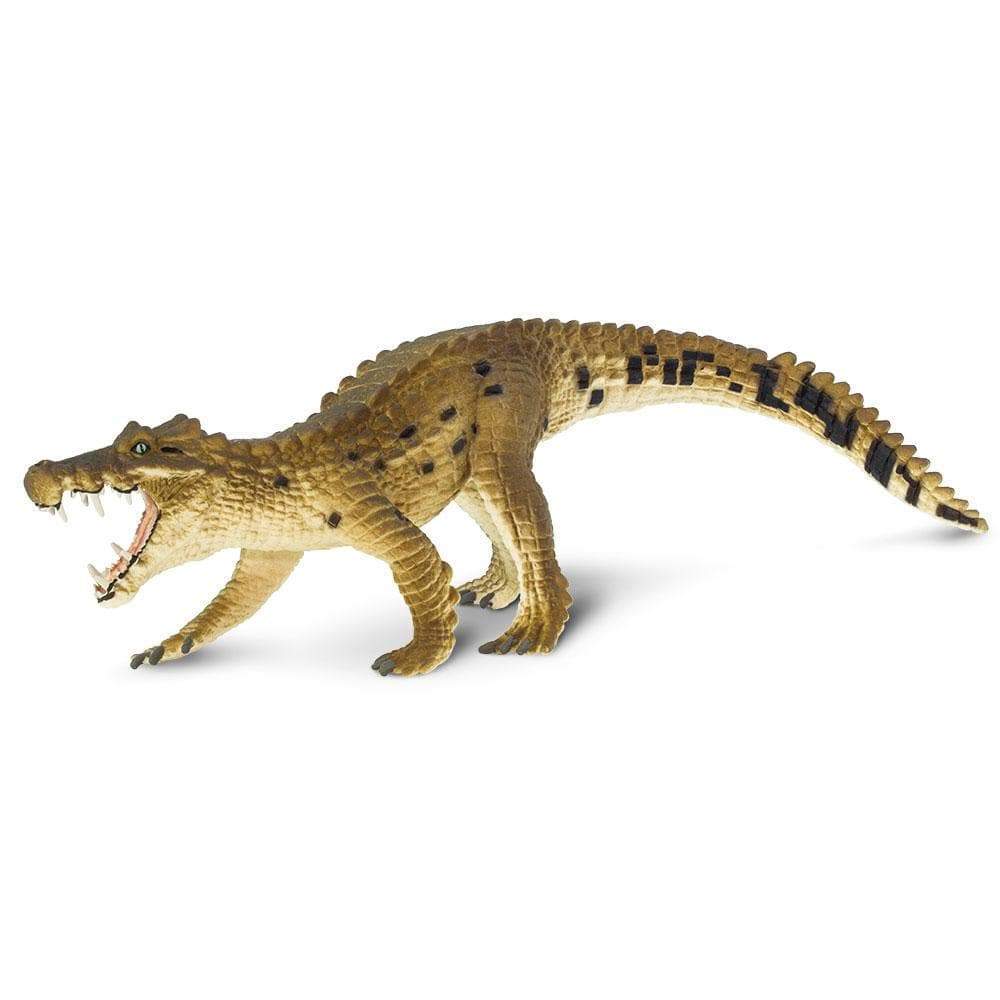
Kaprosuchus Toy
Kaprosuchus shows that prehistoric ‘crocs’ were more diverse than crocodiles today. This extinct relative of modern crocodiles had tusk-like fangs that earned it the nickname “boar croc”. It lived in northern Africa during the late Cretaceous, 95 million years ago.
- History: Kaprosuchus saharicus is known only from one almost complete 1.7-foot-long skull, described and named in 2009. The genus name means ‘boar crocodile’, in reference its three pairs of long fangs, one pair of which protrude upwards and are reminiscent of the tusks of a boar. The species name refers to the Sahara where it was discovered.
- Scientific Name: Kaprosuchus saharicus
- Characteristics: Kaprosuchus was a meat-eating crocodylomorph - the group that includes modern crocodiles. It had long broad jaws filled with pointed teeth, including enlarged tusk-like fangs. Its strong jaw muscles provided a powerful bite. The body of this crocodile ancestor is unknown, but as our Kaprosuchus toy portrays, it was probably similar to other crocodylomorphs with four short legs and a long tail.
- Size: This Kaprosuchus toy is 8.25 inches long and 2 inches high.
- The Kaprosuchus is part of the Wild Safari® Prehistoric World collection
- All of our products are Non-toxic and BPA free
Kaprosuchus shows that prehistoric ‘crocs’ were more diverse than crocodiles today. This extinct relative of modern crocodiles had tusk-like fangs that earned it the nickname “boar croc”. It lived in northern Africa during the late Cretaceous, 95 million years ago.
- History: Kaprosuchus saharicus is known only from one almost complete 1.7-foot-long skull, described and named in 2009. The genus name means ‘boar crocodile’, in reference its three pairs of long fangs, one pair of which protrude upwards and are reminiscent of the tusks of a boar. The species name refers to the Sahara where it was discovered.
- Scientific Name: Kaprosuchus saharicus
- Characteristics: Kaprosuchus was a meat-eating crocodylomorph - the group that includes modern crocodiles. It had long broad jaws filled with pointed teeth, including enlarged tusk-like fangs. Its strong jaw muscles provided a powerful bite. The body of this crocodile ancestor is unknown, but as our Kaprosuchus toy portrays, it was probably similar to other crocodylomorphs with four short legs and a long tail.
- Size: This Kaprosuchus toy is 8.25 inches long and 2 inches high.
- The Kaprosuchus is part of the Wild Safari® Prehistoric World collection
- All of our products are Non-toxic and BPA free
Description
Kaprosuchus shows that prehistoric ‘crocs’ were more diverse than crocodiles today. This extinct relative of modern crocodiles had tusk-like fangs that earned it the nickname “boar croc”. It lived in northern Africa during the late Cretaceous, 95 million years ago.
- History: Kaprosuchus saharicus is known only from one almost complete 1.7-foot-long skull, described and named in 2009. The genus name means ‘boar crocodile’, in reference its three pairs of long fangs, one pair of which protrude upwards and are reminiscent of the tusks of a boar. The species name refers to the Sahara where it was discovered.
- Scientific Name: Kaprosuchus saharicus
- Characteristics: Kaprosuchus was a meat-eating crocodylomorph - the group that includes modern crocodiles. It had long broad jaws filled with pointed teeth, including enlarged tusk-like fangs. Its strong jaw muscles provided a powerful bite. The body of this crocodile ancestor is unknown, but as our Kaprosuchus toy portrays, it was probably similar to other crocodylomorphs with four short legs and a long tail.
- Size: This Kaprosuchus toy is 8.25 inches long and 2 inches high.
- The Kaprosuchus is part of the Wild Safari® Prehistoric World collection
- All of our products are Non-toxic and BPA free